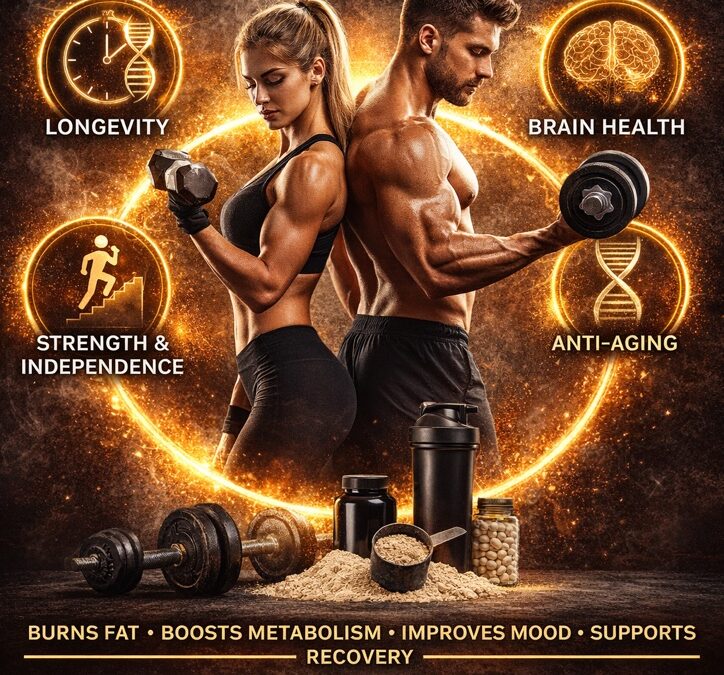
Why Recovery Starts with Nutrition
Every time you train—whether it’s lifting, running, or pushing through a hard workout—you’re creating micro-tears in your muscle fibers.
That’s not a bad thing.
That’s how growth happens.
But here’s the truth:
👉 Your body doesn’t rebuild during the workout—it rebuilds after.
And it can only rebuild effectively if you give it the right raw materials.
That’s where protein and amino acids come in.
Protein: The Foundation of Muscle Repair
Protein is made up of amino acids, which are the building blocks your body uses to:
- Repair damaged muscle tissue
• Build stronger muscle fibers
• Support immune function
• Regulate hormones and enzymes
Without enough protein, your body simply can’t keep up with the demands of training.
You may still be working hard—but you won’t see the results.
Amino Acids: The Real Drivers of Recovery
Not all protein is created equal.
What really matters is the amino acid profile—especially the essential amino acids (EAAs) your body cannot produce on its own.
One of the most important is leucine, which plays a key role in triggering muscle protein synthesis (the process of rebuilding muscle).
👉 No amino acids = no repair
👉 No repair = no progress
Best Food Sources for Protein & Amino Acids
If your goal is to recover, rebuild, and perform at a high level, choosing the right protein sources matters.
🥩 Top Animal-Based Protein Sources (Complete & Efficient)
These provide all essential amino acids in forms your body can use effectively:
- Eggs (one of the most complete protein sources)
- Chicken breast
- Ground beef
- Steak
- Turkey
- Salmon (adds omega-3s for inflammation support)
- Tuna
- Greek yogurt
- Cottage cheese
👉 These are highly bioavailable, meaning your body absorbs and uses them efficiently—making recovery faster and more effective.
🌱 Plant-Based Protein Sources
- Lentils
- Chickpeas
- Black beans
- Quinoa
- Tofu & tempeh
- Edamame
- Nuts and seeds
👉 These can contribute to protein intake—but require more planning to be effective for performance.
Do All Protein Sources Contain Amino Acids?
Yes—they do.
Any food that contains protein—whether it’s eggs, steak, chicken, fish, beans, or nuts—contains amino acids.
👉 But the difference comes down to completeness and efficiency.
- Animal-based proteins = complete + highly usable
- Plant-based proteins = often incomplete + require combining
The Reality of Plant-Based Protein for Athletes
While plant-based options can absolutely contribute to your overall protein intake, there are important challenges—especially for performance:
- Many are incomplete proteins (missing key amino acids)
- They are typically lower in leucine, which is critical for muscle repair
- They require combining multiple sources to be effective
👉 And this is where it becomes more challenging for athletes.
To reach the same protein quality and amino acid profile as animal-based sources, plant-based diets often require:
- Significantly more calories (2–3x or more)
- Larger food volume
- More meal prep and planning
👉 For example:
To match the protein and amino acid profile of a serving of chicken, steak, or eggs, you may need multiple servings of beans, grains, and legumes—which increases:
- Caloric intake
- Cost of food
- Meal volume and prep time
🎯 Why This Matters for Performance & Recovery
If you’re:
- Training consistently
- Trying to maintain or lose weight
- Focused on optimizing recovery
👉 Relying heavily on plant-based protein alone can make it:
- Harder to hit protein and amino acid targets
- More expensive over time
- More difficult to recover efficiently
🧠 A Balanced Approach
This doesn’t mean plant-based eating is “bad”—it simply means you need to be intentional.
- Prioritize complete protein sources when possible
- Be aware of both total protein AND amino acid intake
- Focus on efficiency, especially if performance is your goal
How Much Protein Do You Actually Need?
For active individuals and athletes:
👉 1 gram of protein per pound of body weight (preferred performance-based recommendation)
This varies based on:
- Training intensity
- Goals (endurance vs strength)
- Recovery demands
The key is consistency—not just one high-protein meal, but steady intake throughout the day.
Timing Matters More Than You Think
After training, your body is primed to absorb nutrients and begin repair.
👉 Aim to consume protein within 30–60 minutes post-workout
This helps:
- Kickstart muscle repair
- Reduce soreness
- Improve overall recovery
Recovery Is More Than Just Protein
True recovery includes:
- Hydration
• Sleep
• Inflammation management
• Nervous system recovery
This is where a more holistic approach matters.
Where CBD Fits Into Recovery
At Asé Pure Naturals, we don’t believe in replacing the fundamentals—we believe in supporting them.
While protein fuels repair, CBD supports the recovery environment by helping:
- Regulate inflammation
• Support muscle and joint comfort
• Promote deeper, more restorative sleep
Topical vs Internal Support
- Topical CBD (Muscle Gel): Targets localized soreness
- Internal CBD (tinctures/softgels): Supports systemic recovery and sleep
👉 Together, they help your body recover more efficiently, so you can keep showing up.
Listen to Your Body
Pay attention:
- Are you constantly sore?
• Are workouts getting harder instead of stronger?
• Is your energy low?
👉 These are signals your body needs better fueling and recovery.
Final Thoughts: Fuel the Work You Put In
You can train hard every single day…
But if you’re not fueling your body properly, you’re leaving results on the table.
Recovery isn’t passive. It’s intentional.
When you combine:
- Smart training
- Proper nutrition
- Quality recovery tools
👉 That’s where real performance happens.
Asé Closing Statement
At Asé Pure Naturals, we are committed to promoting movement at every level—because fitness is not just about performance, it’s about transformation.
We believe that through sport and physical discipline, we strengthen our bodies, sharpen our minds, and deepen our sense of purpose. These habits extend far beyond training, shaping how we live, lead, and grow.
Movement is the foundation. Growth is the result.