If you care about performance, longevity, and feeling strong in your everyday life, there’s one number that tells a powerful story about your fitness: VO₂ max.
VO₂ max measures how much oxygen your body can use during intense exercise. In simple terms, it reflects how efficiently your heart, lungs, and muscles work together to fuel movement. The higher your VO₂ max, the better your body is at producing energy, resisting fatigue, and recovering faster.
And here’s the truth: VO₂ max isn’t just for elite athletes. It’s one of the strongest predictors of long-term health and independence as we age.
Let’s break down what it means, how running and walking affect it, and how you can improve it at any stage of life.
Why VO₂ Max Is Such a Big Deal
VO₂ max is often called the gold standard of cardiovascular fitness because it reflects:
- Heart strength and stroke volume
- Lung capacity and oxygen exchange
- Muscle efficiency and mitochondrial health
- Overall endurance and recovery ability
Higher VO₂ max is linked to:
- Lower risk of heart disease
- Better blood sugar control
- Improved brain health
- Higher energy levels
- Longer lifespan
In short: a higher VO₂ max means your body is better at doing hard things — and bouncing back from them.
VO₂ Max vs. Max Heart Rate: What’s the Difference and Why It Matters
VO₂ max and max heart rate are often mentioned together, but they are not the same — and they don’t tell you the same thing about your fitness.
Max heart rate is simply the fastest your heart can beat during all-out effort. It is largely determined by age and genetics, and it doesn’t change much with training. Two people can be the same age and fitness level and still have very different max heart rates.
VO₂ max, on the other hand, measures how much oxygen your body can actually use during intense exercise. It reflects how well your heart pumps blood, how efficiently your lungs exchange oxygen, and how effectively your muscles use that oxygen to produce energy. Unlike max heart rate, VO₂ max is highly trainable and can improve significantly with consistent, properly structured training.
This means someone can have:
- A high max heart rate but lower VO₂ max, where the heart beats fast but oxygen delivery and muscle efficiency are limited.
- A lower max heart rate but higher VO₂ max, where the heart pumps more blood per beat and the muscles use oxygen extremely well — a common trait in well-trained endurance athletes.
From a performance standpoint, VO₂ max is far more important than max heart rate. As VO₂ max improves, you can move faster at the same heart rate, recover more quickly between hard efforts, and handle greater training loads without breaking down. That’s why athletes often see pace and endurance improvements even when their max heart rate stays exactly the same.
In simple terms:
Max heart rate tells you how fast the engine can spin.
VO₂ max tells you how powerful and efficient that engine really is.
Running vs. Walking: Which Improves VO₂ Max More?
Both running and walking are powerful tools for health, but they don’t impact VO₂ max the same way.
🚶 Walking: Great for Health, Gentle on the Body
Walking improves:
- Circulation
- Blood pressure
- Joint health
- Baseline cardiovascular fitness
Brisk walking can raise VO₂ max, especially in beginners or those returning to movement after time off. It’s also perfect for recovery days and building consistency.
But walking alone usually doesn’t push the body hard enough to significantly increase VO₂ max once you’ve built basic fitness.
🏃 Running: Stronger Stimulus for VO₂ Max Gains
Running (and other high-effort cardio) challenges:
- Oxygen delivery
- Heart output
- Muscle oxygen usage
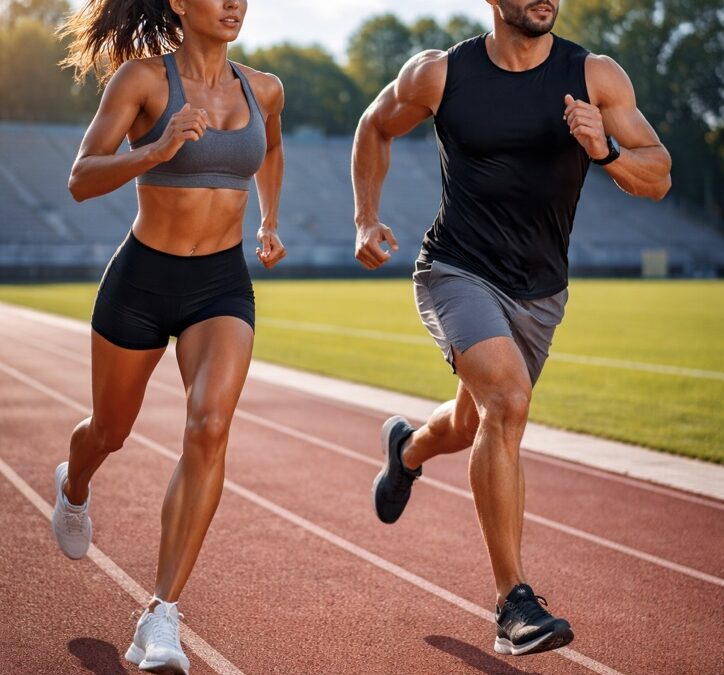
This higher demand is what drives VO₂ max improvements. Intervals, tempo runs, hill work, and sustained efforts all push the cardiovascular system to adapt and become more efficient.
That doesn’t mean everyone needs to run marathons — but it does mean periods of higher intensity matter if improving VO₂ max is the goal.
The Best Way to Improve VO₂ Max: Mix Intensity With Consistency
The magic formula is simple:
✅ Zone 2 (Easy Effort)
This is conversational pace cardio — jogging, brisk walking, cycling.
Benefits:
- Builds aerobic base
- Improves fat metabolism
- Enhances recovery
Do this often. It builds the foundation.
✅ High-Intensity Intervals
Short bursts of hard effort followed by recovery.
Examples:
- 30–60 seconds fast, 1–2 minutes easy
- Hill sprints
- Fast finish runs
Benefits:
- Increases oxygen uptake
- Improves heart efficiency
- Triggers VO₂ max improvements
You don’t need a ton of this — even 1–2 sessions per week can make a big difference.
✅ Strength Training Still Matters
Strong muscles use oxygen more efficiently. Lifting also supports:
- Injury prevention
- Running economy
- Overall performance
Cardio builds the engine. Strength builds the chassis.
You need both.
Why VO₂ Max Matters for Performance and Longevity
VO₂ max represents the maximum amount of oxygen your body can use during intense exercise and is one of the strongest indicators of cardiovascular fitness and long-term health.
Higher VO₂ max levels are associated with:
- Improved endurance and faster recovery
- Lower risk of cardiovascular disease
- Better metabolic and brain health
- Greater mobility and independence with age
Both walking and running improve cardiovascular health, but running and higher-intensity training place greater demands on the heart and muscles, which leads to larger improvements in VO₂ max over time. Interval training and hill work are especially effective because they challenge oxygen delivery and muscle efficiency.
Consistent aerobic training combined with strength training supports better movement economy and reduces injury risk, allowing athletes to train at the intensities needed to improve VO₂ max.
Because recovery plays a key role in training adaptation, supporting muscle health and reducing soreness can help athletes maintain consistency and train with higher quality sessions. Consistent training and recovery together are essential for improving performance and protecting long-term health.
VO₂ Max and Aging: Why It Matters Even More Over Time
VO₂ max naturally declines with age — but how fast it drops depends heavily on lifestyle.
Active adults maintain significantly higher VO₂ max levels than sedentary peers, even decades later.
Higher VO₂ max as we age means:
- Better balance and mobility
- Lower fall risk
- Stronger immune function
- Greater independence
In other words: fitness is freedom.
You don’t stop training because you get older — you get older faster when you stop training.
And the best part? VO₂ max is highly trainable at any age. The body adapts when you challenge it.
Recovery: The Missing Piece in Performance Gains
Training pushes your limits. Recovery is where the gains actually happen.
When muscles are sore, inflamed, or tight, it’s harder to train consistently and at the intensity needed to improve VO₂ max. That’s why recovery isn’t optional — it’s part of the program.
Supporting muscle recovery helps you:
- Train more consistently
- Reduce injury risk
- Maintain range of motion
- Show up strong for the next session
At Asé Pure Naturals, we believe recovery should be simple, effective, and built into daily routines — not something you only think about when you’re already hurting.
Because staying ready means staying moving.
Train for More Than Just Miles
VO₂ max isn’t about chasing a number on your watch. It’s about building a body that can handle stress, recover faster, and perform when it matters — whether that’s race day, long workdays, or just keeping up with life.
Running and walking both have a place. What matters most is:
- Moving consistently
- Challenging yourself regularly
- Recovering intentionally
Because performance doesn’t come from motivation alone — it comes from discipline, smart training, and taking care of your body so you can keep showing up.
And that’s what real recovery is all about.
Asé Pure Naturals Team